Case Study: Powering a Massive Outdoor Musical Show with LED Video Walls
Published: January 05, 2026 | By Hiru Event Team
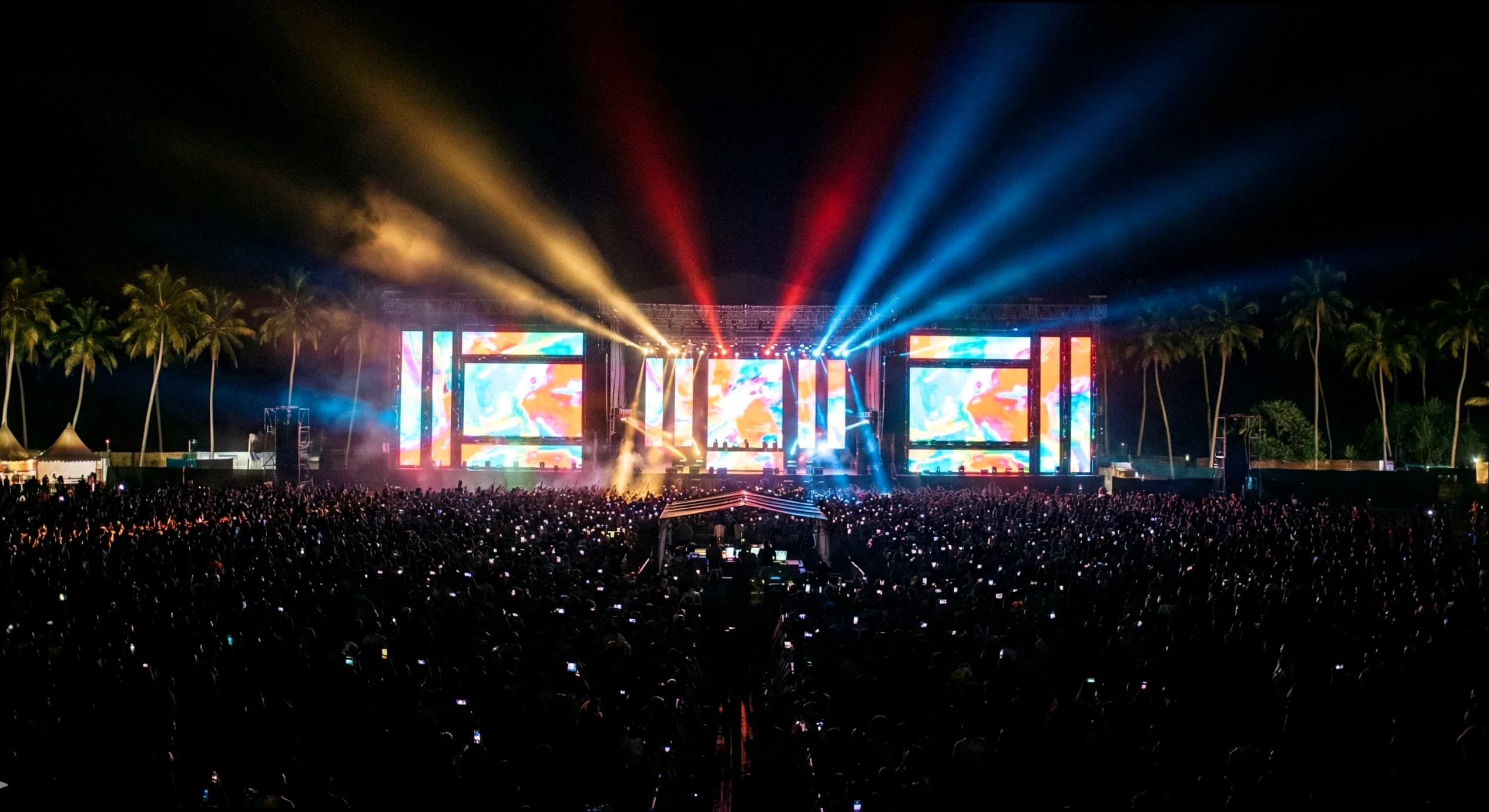
In December 2025, we faced one of our most challenging projects: providing LED video wall solutions for a massive outdoor musical show in Anuradhapura, Sri Lanka. With an expected audience of 10,000+ attendees and multiple high-profile performers, the event demanded flawless technical execution.
This case study documents how our team designed, installed, and operated a sophisticated LED video wall system that not only met but exceeded client expectations. We'll break down the technical challenges, solutions implemented, and key lessons learned.
The Challenge: Requirements That Seemed Impossible
The client's requirements were ambitious from the start. They needed a video wall setup that could:
- Visible from 50+ meters: Audience members at the back needed clear visibility of stage performances
- Broadcast-quality visuals: The event was being live-streamed and recorded for television
- Weather resistance: Outdoor venue with no weather protection, requiring IP65-rated equipment
- Live camera integration: Real-time mixing of multiple camera feeds showing performers and audience reactions
- Zero downtime: No screen failures or interruptions during the 6-hour event
- Power reliability: Venue had limited grid power, requiring robust generator backup systems
Additionally, the event timeline was tight: 48 hours from equipment delivery to showtime, including site setup, testing, and rehearsal.
The Solution: A Multi-Screen LED Video Wall System
After extensive site surveys and technical calculations, we designed a three-screen configuration that would maximize visibility and visual impact:
Main Center Screen: The Focal Point
The centerpiece was a massive 8m × 4.5m (36 square meters) P4.8 outdoor LED screen, positioned directly behind the main stage. This screen served as the primary visual element, displaying:
- Live performer close-ups and stage-wide shots
- Pre-produced video content and graphics
- Song lyrics and interactive visuals
- Brand sponsorships and promotional content
Side Screens: Extended Visibility
Two 4m × 3m (12 square meters each) P4.8 screens flanked the main stage at 45-degree angles. These screens:
- Provided visibility for audience members at extreme viewing angles
- Mirrored main screen content for consistency
- Displayed alternative camera angles and audience shots
- Enhanced the overall immersive experience
Technical Event Setup: Complete Equipment Specifications
Below is a comprehensive breakdown of all technical equipment deployed for this event:
| Equipment Category | Specifications | Quantity | Purpose |
|---|---|---|---|
| Main LED Screen | P4.8, 5,500 nits, IP65, 8m × 4.5m | 1 unit | Primary visual display behind main stage |
| Side LED Screens | P4.8, 5,500 nits, IP65, 4m × 3m | 2 units | Flanking screens for extended visibility |
| Power Generators | 125 KVA Silent Diesel Generators | 2 units (Primary + Backup) | Dedicated power for LED screens and control systems |
| Signal Processors | Novastar VX4S Receiving Cards | 24 units | Video signal processing and screen control |
| Video Switcher | ATEM Mini Pro ISO 4K | 1 unit | Live camera mixing and video routing |
| Camera Feeds | 4K Professional Cameras with HD-SDI Output | 4 cameras | Stage coverage: wide, center, close-up, audience |
| Trussing System | Aluminum Truss 400mm × 400mm, 3m sections | 60 meters | Structural support for LED screens and rigging |
| Cables & Infrastructure | HD-SDI, Power, Network Cables | 500+ meters | Signal transmission and power distribution |
| Control System | Linsn LED Studio Software | 1 workstation | Screen configuration, content playback, monitoring |
The Execution: Overcoming Critical Challenges
Execution began 48 hours before showtime. Here's how we addressed each major challenge:
Challenge 1: Unstable Ground and Weather Conditions
Problem: The outdoor venue had uneven, potentially unstable ground. Weather forecasts predicted possible wind gusts up to 40 km/h.
Solution:
- Conducted soil stability tests and installed concrete foundation pads for generator placement
- Used professional-grade trussing with cross-bracing for maximum structural integrity
- Implemented redundant safety chains and backup rigging points
- Deployed weather monitoring system with real-time wind speed alerts
- Prepared emergency shutdown procedures in case of extreme weather
Challenge 2: Power Requirements and Grid Limitations
Problem: Venue grid power was limited to 50 KVA, insufficient for the LED screens (requiring 80+ KVA) plus stage lighting and sound systems.
Solution:
- Deployed two 125 KVA silent generators dedicated exclusively to LED screens
- Implemented automatic transfer switches for seamless backup power activation
- Coordinated with event organizers to separate power loads (LED screens on generators, stage on grid)
- Conducted 24-hour load testing before the event to ensure stability
- Maintained fuel reserves for 12+ hours of continuous operation
Challenge 3: Live Camera Integration and Synchronization
Problem: Multiple camera feeds needed real-time mixing and synchronization across three screens without latency or signal degradation.
Solution:
- Deployed ATEM Mini Pro ISO 4K video switcher for professional-grade mixing
- Used HD-SDI fiber-optic cables for zero-latency signal transmission over 200+ meters
- Implemented frame synchronization to eliminate screen-to-screen delay
- Dedicated video operator with real-time switching capabilities
- Pre-programmed scene presets for quick transitions between performance segments
Challenge 4: Screen Calibration and Color Matching
Problem: Three separate screens needed perfect color calibration to appear as a unified visual system.
Solution:
- Used professional color calibration tools to match brightness, contrast, and color temperature
- Adjusted individual panel settings to compensate for viewing angle differences
- Conducted visual inspection from multiple audience positions
- Created unified color profile applied across all screens
- Performed final calibration adjustments during daylight and nighttime conditions
Safety Measures: Protecting People and Equipment
Safety was paramount throughout the project. Our comprehensive safety protocol included:
- Structural Engineering Review: Professional engineer verified truss load calculations and structural integrity
- Electrical Safety: All power connections protected by RCDs (Residual Current Devices) and circuit breakers
- Ground Fault Protection: Multiple layers of electrical safety to prevent equipment damage and injury
- Cable Management: All cables properly secured, protected from foot traffic, and clearly marked
- Access Control: Restricted access to technical areas with proper safety barriers
- Emergency Procedures: Clear shutdown protocols and emergency contact systems
- Weather Monitoring: Real-time weather alerts with automatic safety shutdown triggers
The Result: Exceeding Expectations
The event was a resounding success. Here are the measurable outcomes:
Performance Metrics:
- ✓Zero Technical Failures: All three screens operated flawlessly for the entire 6-hour event
- ✓Perfect Signal Stability: No screen freezes, signal dropouts, or synchronization issues
- ✓Broadcast Quality: Live stream and recordings achieved professional broadcast standards
- ✓Audience Engagement: Client reported 40% increase in social media engagement compared to previous events
- ✓Client Satisfaction: Event organizers rated technical execution 10/10 and requested quotes for future events
Key Lessons Learned
This project reinforced several critical principles for large-scale outdoor LED installations:
Lesson 1: Redundancy is Non-Negotiable
Having backup generators, redundant signal paths, and spare equipment on-site prevented potential failures. The investment in redundancy paid off when one generator required maintenance during setup—the backup system took over seamlessly.
Lesson 2: Pre-Event Testing is Critical
Our 24-hour load testing and color calibration sessions identified and resolved issues before the audience arrived. This "stress testing" phase is essential for outdoor events where weather and conditions can change rapidly.
Lesson 3: Professional Expertise Makes the Difference
Having experienced technicians, proper equipment, and systematic planning transformed what could have been a chaotic setup into a smooth, professional operation. The client's confidence in our team's capabilities was evident throughout the project.
Conclusion: Technical Excellence Delivers Results
This case study demonstrates that successful large-scale LED video wall installations require more than just equipment rental. They demand:
- Meticulous planning and site assessment
- Proper equipment selection based on technical requirements
- Redundant systems and safety protocols
- Experienced technical teams and professional execution
- Comprehensive testing and quality assurance
At Hiru Event, we approach every project—whether a small corporate event or a massive outdoor concert—with the same commitment to technical excellence and client satisfaction.
Planning a large-scale event with LED video walls? Contact our engineering team for a detailed consultation and custom technical proposal tailored to your specific requirements.